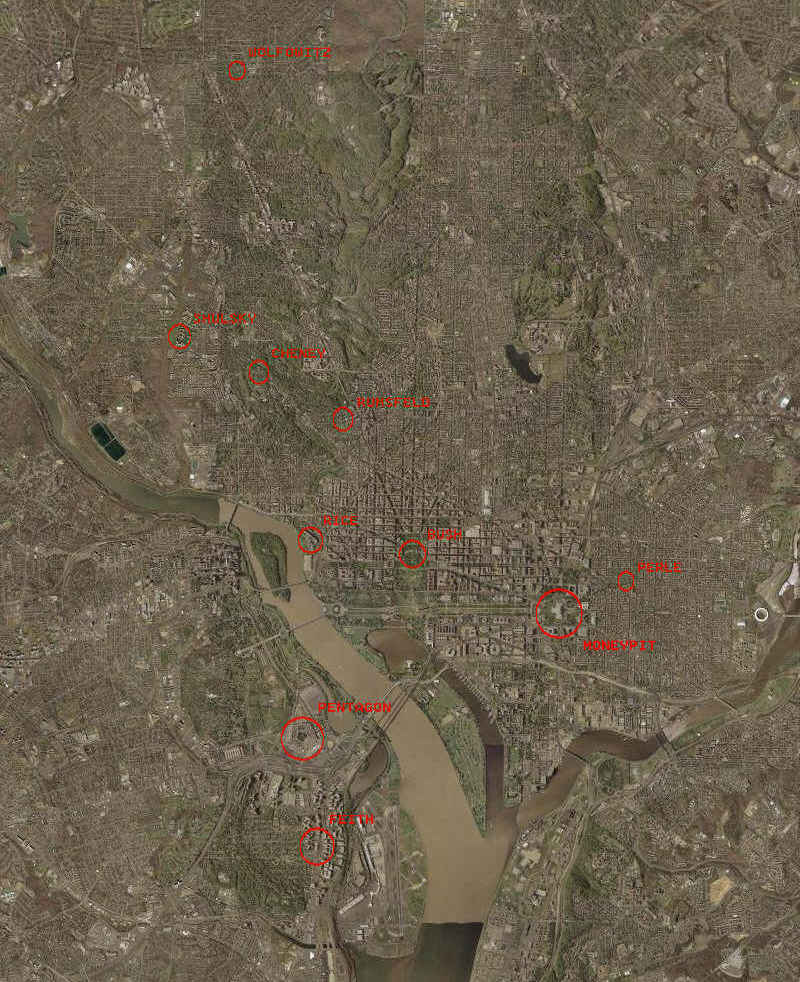
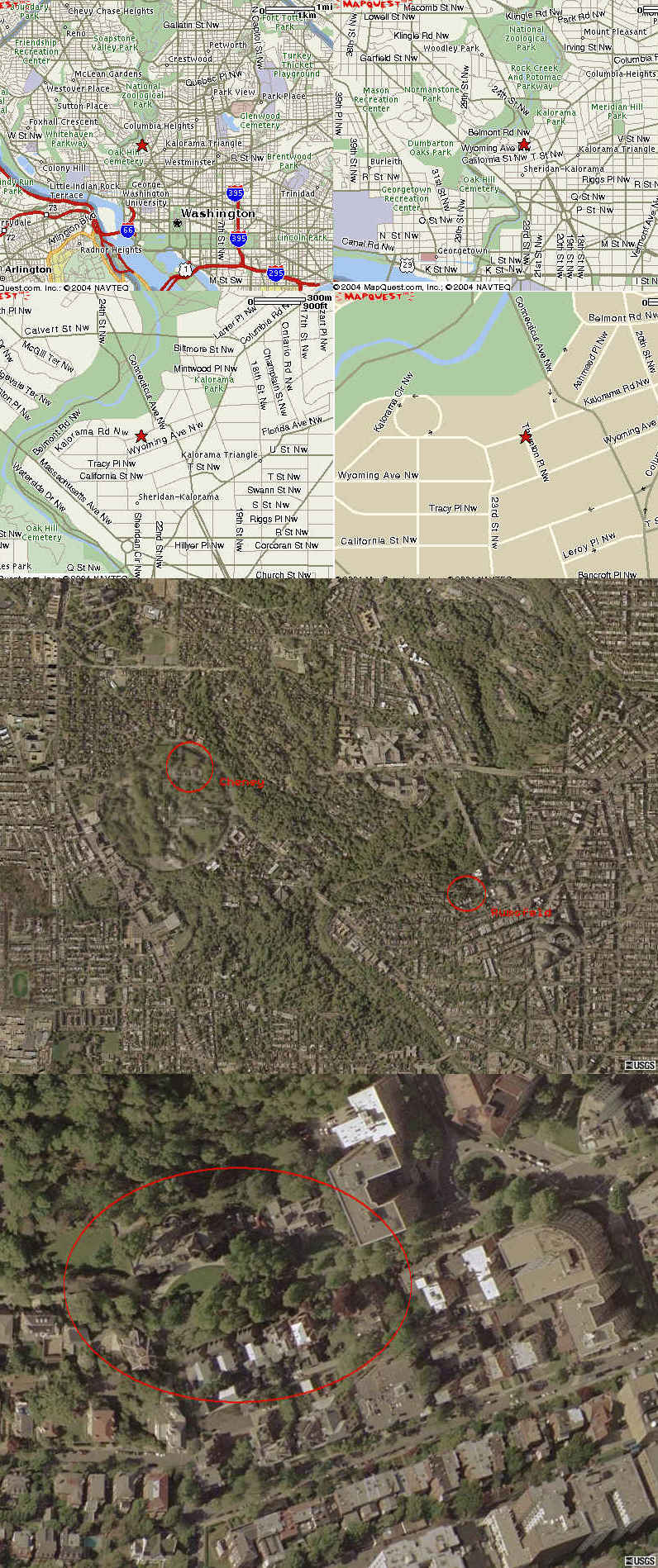
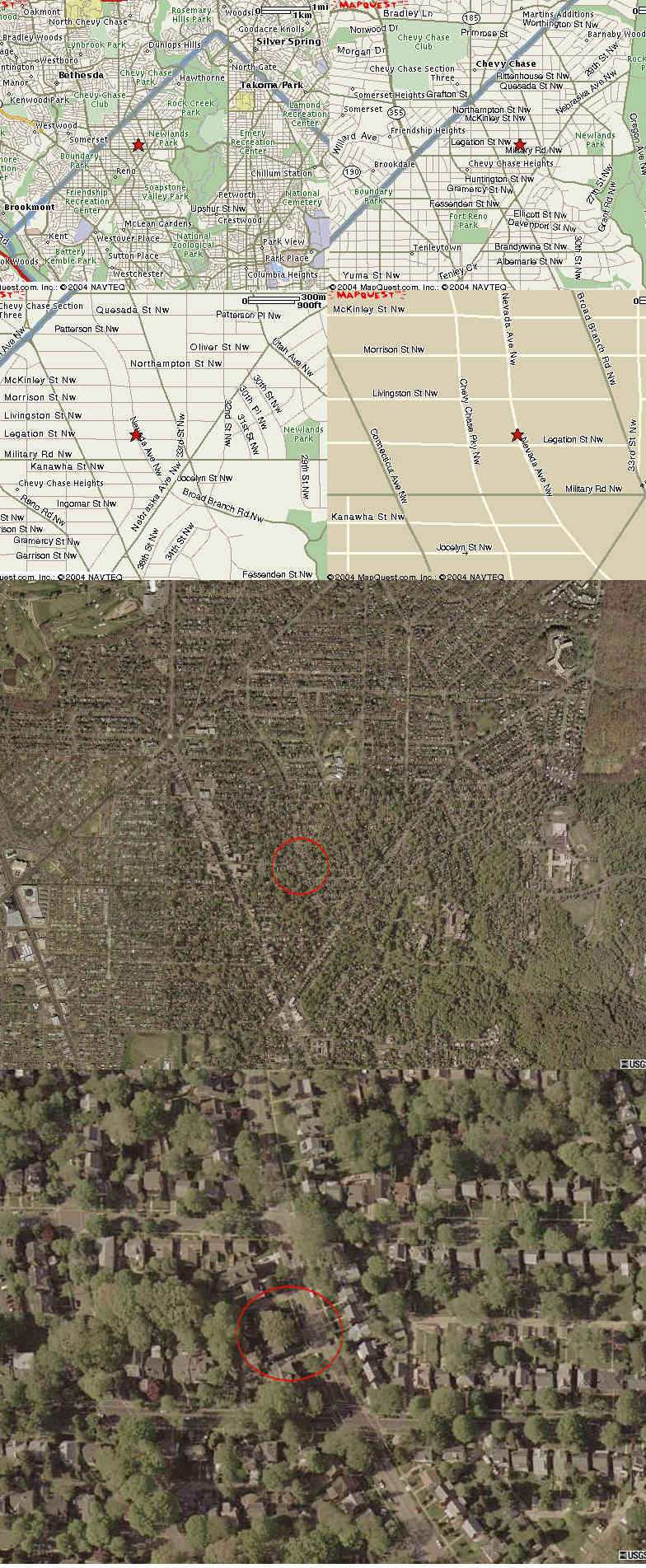
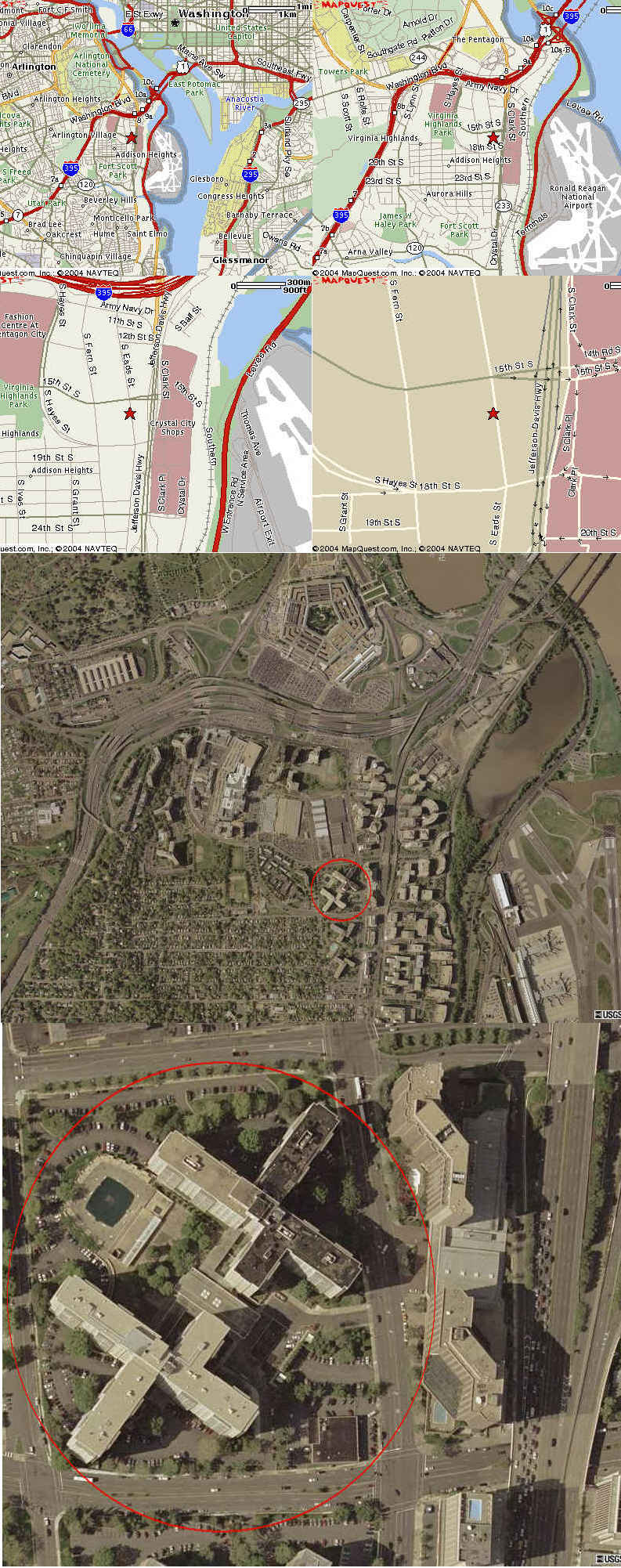
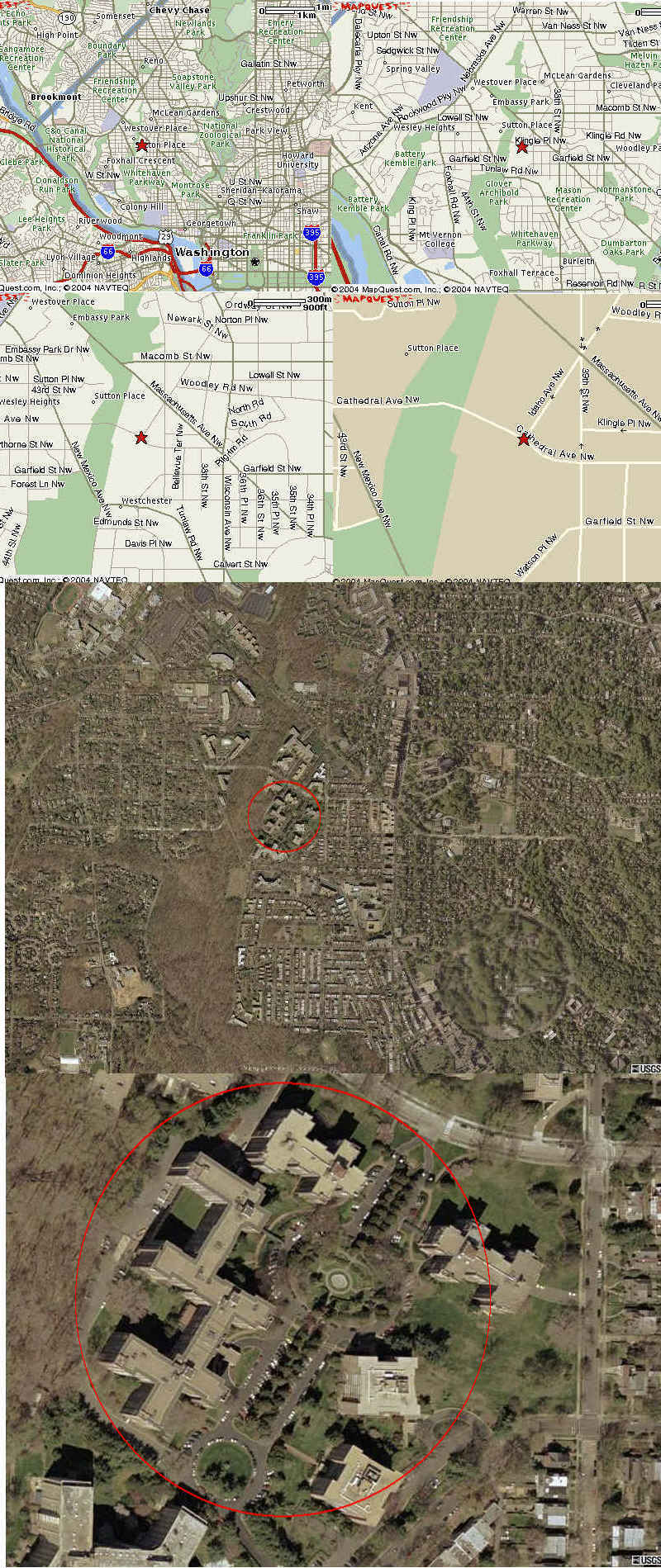
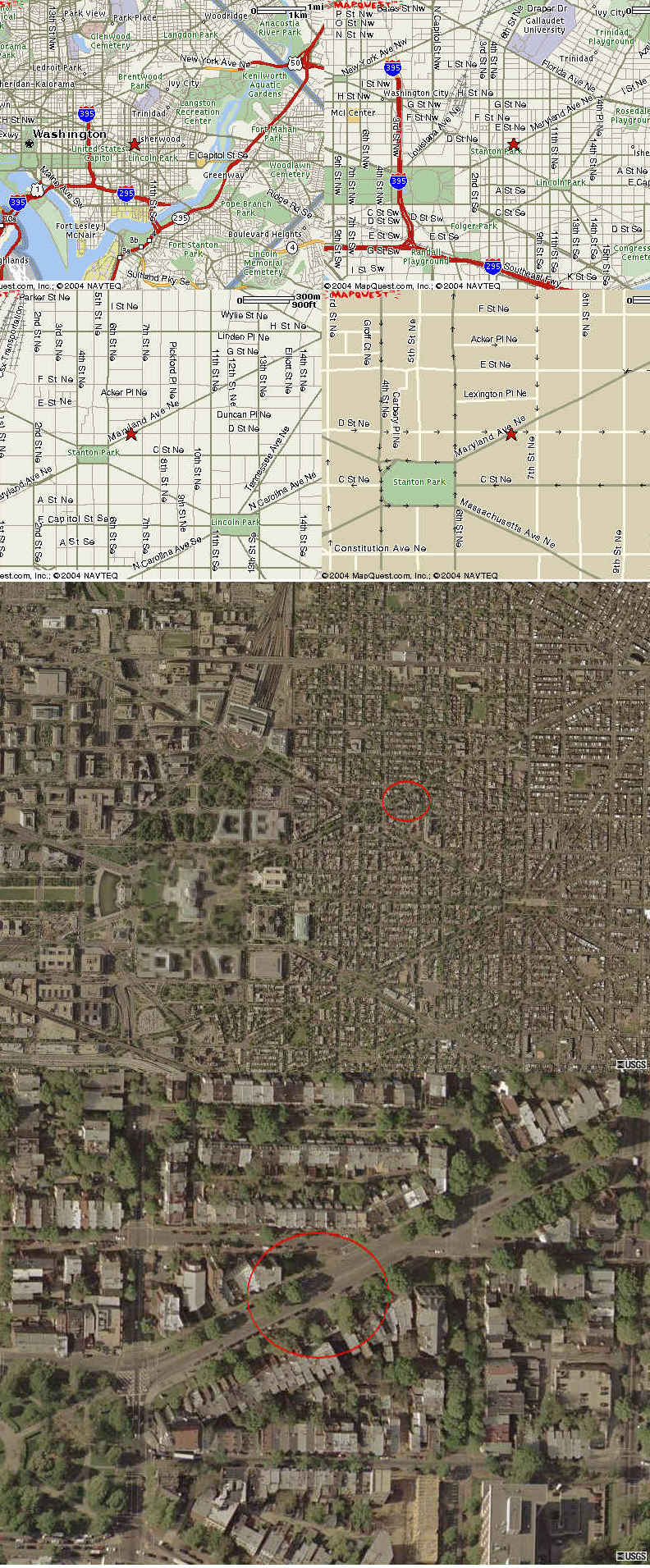
22 June 2004. Thanks to R., correct Feith aerial photos.
Confirmation of the address of David Wurmser is needed. Send to:
cryptome[at]earthlink.net. US Search shows these, but it is not clear if
any are for the OSP Wurmser:
DAVID WURMSER, 904 CRESTWICK RD, BALTIMORE, MD 21286
DAVID WURMSER, 8325 SILVER TRUMPET DR, COLUMBIA, MD 21045
DAVID WURMSER, 3302 HAMPTON POINT, SILVER SPRING, MD 20904
21 June 2004
Maps from Mapquest.com
Source of photos:
http://www.terraserver-usa.com
Source of addresses: USSearch.com
http://www.guardian.co.uk/Iraq/Story/0,2763,999737,00.html
The Guardian, Thursday July 17, 2003
The spies who pushed for war
Julian Borger reports on the shadow rightwing intelligence network set up
in Washington to second-guess the CIA and deliver a justification for toppling
Saddam Hussein by force
According to former Bush officials, all defence and intelligence sources,
senior administration figures created a shadow agency of Pentagon analysts
staffed mainly by ideological amateurs to compete with the CIA and its military
counterpart, the Defence Intelligence Agency.
The agency, called the Office of Special Plans (OSP), was set up by the defence
secretary, Donald Rumsfeld, to second-guess CIA information and operated
under the patronage of hardline conservatives in the top rungs of the
administration, the Pentagon and at the White House, including Vice-President
Dick Cheney.
The ideologically driven network functioned like a shadow government, much
of it off the official payroll and beyond congressional oversight. But it
proved powerful enough to prevail in a struggle with the State Department
and the CIA by establishing a justification for war.
James Bamford, A Pretext for War, 2004:
The blueprint for the new Bush policy had actually been drawn up five years
earlier by three of his top national security advisors. Soon to be appointed
to senior administration positions, they were Richard Perle, Douglas Feith,
and David Wurmser. Ironically, the plan was orignally intended not for Bush
but for another world leader, Israeli Prime Minister Benhamin Netanyahu.
... Wisely, Netanyahu rejected the task force's plan. But now, with the election
of a receptive George W. Bush, they dusted off their preemptive war strategy
and began getting ready to put it to use.
Perle became chairman of the reinvigorated and powerful Defense Policy Board,
packing it with like-minded neoconservative super-hawks anxious for battle.
Feith was appointed to the highest policy position in the Pentagon,
Undersecretary of Defense for Policy. Wurmser moved into a top policy position
in the State Department before later becoming Cheney's top Middle East expert.
With the Pentagon now under Secretary of Donald Rumsfeld and his deputy,
Paul Wolfowitz -- both of whom had also long believed that Saddam Hussein
should have been toppled during the first Gulf War -- the war planners were
given free rein. What was needed, however, was a pretext -- perhaps a major
crisis. "Crises can be opportunities," wrote Wurmser in his paper calling
for an American-Israeli preemptive war throughout the Middle East. ...
As the move toward war began gaining momentum in late August 2002, Feith
created another new organization, the Office of Special Plans. Its purpose
was to conduct advance war planning for Iraq and one of its most important
responsibilities was "media strategy." Above all, the office was Top Secret.
Picked to head the OSP was still another longtime Perle protégé,
Abram N. Shulsky.
|